
Non-medical home care guide for NYC & Westchester families
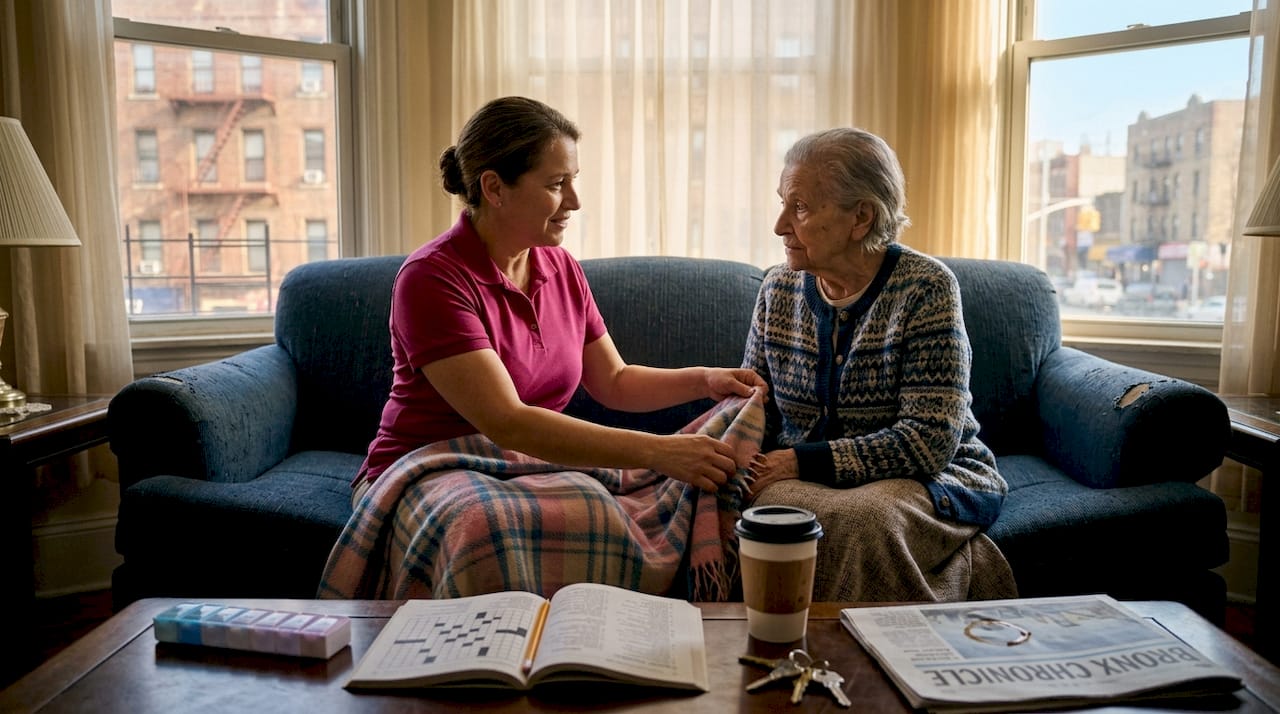
TL;DR:
Non-medical home care provides daily assistance without medical procedures to support seniors’ independence.
It is more affordable and personalized compared to institutional care like nursing homes or assisted living.
Licensed agencies ensure safe, quality care, emphasizing companionship and emotional well-being.
More than 30% of older New Yorkers face significant challenges related to home access and mobility, yet many families across Brooklyn, Queens, Manhattan, the Bronx, Staten Island, and Westchester County still feel lost when trying to find reliable care. Non-medical home care is one of the most practical and affordable solutions available, but the term itself causes a lot of confusion. Is it the same as home health care? Does insurance cover it? Do agencies need to be licensed? This guide answers all of those questions clearly so you can make a confident, informed decision for your loved one.
Table of Contents
Key Takeaways
Point | Details |
Personalized care matters | Non-medical home care adapts to individual needs using assessments for daily and instrumental living activities. |
Empowers independence | Services help seniors and mobility-impaired adults stay at home, reducing isolation and boosting quality of life. |
Costs are manageable | Non-medical care is more affordable than facility care, with payment options varying by region and provider. |
Licensing ensures safety | New York requires agencies to be licensed, giving families confidence in regulated, supervised care. |
Choosing wisely is key | Understanding local regulations and care options helps families select reputable providers and avoid common pitfalls. |
What defines non-medical home care?
Non-medical home care is exactly what the name says. It is care that does not involve clinical or medical procedures. A trained caregiver, not a nurse or physician, comes to your loved one’s home and assists with the tasks that make daily life possible. That could mean helping with bathing, dressing, grooming, preparing meals, doing light housework, running errands, or simply providing steady companionship throughout the day.
This type of care is distinct from home health care, which involves licensed clinicians performing skilled medical services such as wound care, physical therapy, or IV treatment. Non-medical care focuses on comfort, safety, and daily function. The goal is to help seniors and individuals with mobility challenges stay in their own homes without needing to move into a nursing facility or assisted living community.
Under New York Public Health Law Article 36, agencies providing this type of care must be licensed and are required to use personalized care plans built around each client’s specific needs. These plans are developed using standardized assessments that measure a person’s ability to perform activities of daily living, often called ADLs, which include basic tasks like eating, bathing, and transferring from a bed to a chair. Agencies also assess instrumental activities of daily living, known as IADLs, which cover things like managing medications, handling finances, and using the telephone.
Here is a clear picture of what non-medical home care typically includes:
Personal hygiene assistance: Bathing, grooming, oral care, and dressing support
Meal preparation: Planning and cooking nutritious meals based on dietary needs or restrictions
Mobility support: Helping seniors move safely around the home, reducing fall risk
Companionship: Meaningful conversation, activities, and emotional support
Medication reminders: Prompting clients to take medications on schedule (not administering them)
Light housekeeping: Laundry, dishwashing, tidying living spaces
Transportation and errands: Accompanying clients to appointments or grocery stores
Care plans are not one-size-fits-all. When we create customized home care plans for our clients, we take into account lifestyle preferences, cultural background, language, and the specific physical and cognitive needs of each individual. That level of personalization is what separates quality home care from simply having someone show up.
“Personalized care means your loved one is seen as a full person, not just a list of tasks. That matters deeply to the people we serve and to the families counting on us.”
Pro Tip: When evaluating any agency, ask specifically how they build care plans. A reputable agency will conduct a formal in-home assessment before placing any caregiver, not after. You can also learn more about compassionate care practices that define high-quality agencies in New York.
How non-medical home care supports independent living
Most families assume their options are limited to two paths: either managing care entirely on their own or moving a loved one into a facility. Non-medical home care opens a third path that is often more practical, more affordable, and more aligned with what seniors actually want.
Data from New York City confirms that over 30% of older adults face real barriers to mobility and home access. That means roughly one in three seniors in this city is at risk of losing independence without some form of structured support. A trained caregiver can be the consistent presence that helps a senior safely manage those barriers every single day.
Here is how non-medical home care specifically supports independence:
Preventing falls and home accidents: Caregivers help with safe transfers, navigate stairs and narrow hallways, and remove fall hazards from the home environment. Fall prevention is one of the top reasons families in Westchester and the five boroughs reach out to us.
Maintaining a routine: Seniors with consistent daily routines experience better cognitive and emotional health. Caregivers help establish and maintain that structure.
Reducing social isolation: Regular caregiver visits provide meaningful human connection. Isolation is a serious public health concern for older adults, and consistent companionship directly addresses it.
Supporting mobility and confidence: Knowing a trained caregiver is present encourages seniors to move more freely without fear. That confidence builds over time and often leads to improved physical function.
Facilitating community engagement: Caregivers can accompany seniors to community centers, religious services, cultural events, or simply to the park, keeping them connected to the world outside their home.
One useful clinical tool worth knowing about is the Elderly Mobility Scale, or EMS. It scores physical function on a scale from 0 to 20, where a score of 14 or higher generally indicates independent mobility. Scores below that threshold signal that structured support is likely needed. Families can use this framework as a starting point when discussing care needs with their doctor or a home care agency.
Pro Tip: If your loved one resists the idea of home care, try framing it as support for their independence rather than a sign they cannot manage alone. Most seniors respond much better when care is presented as a tool that keeps them in control of their own life. Resources like this guide on senior wellness support can help frame those conversations at home.
The bottom line is that well-matched non-medical home care does not make seniors more dependent. It gives them the steady support they need to stay independent longer. Families who want practical strategies can also explore this detailed resource on how to support seniors at home.
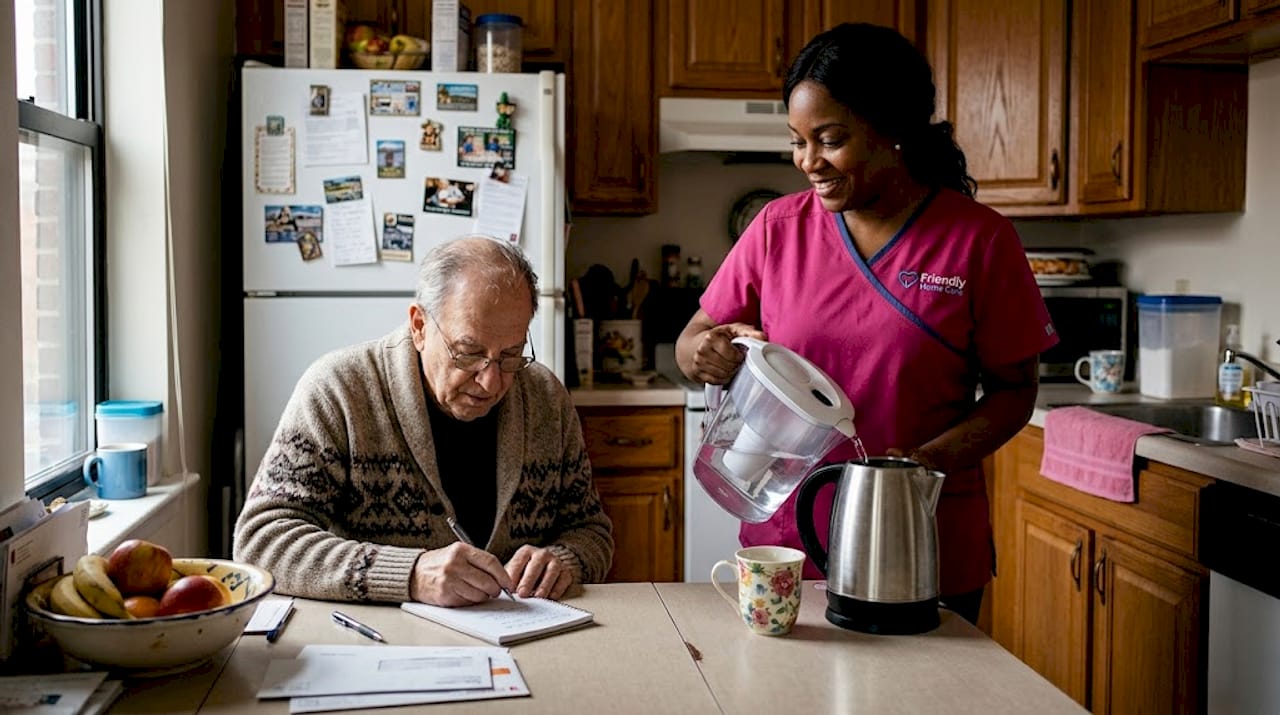
Cost, affordability, and payment options in NYC/Westchester
One of the biggest questions families ask is simple: what will this cost us? The honest answer is that non-medical home care in New York is more affordable than most families expect, especially when compared to the cost of institutional care.
National averages for in-home caregiver rates range from $33 to $35 per hour in 2025 and 2026. In New York City and Westchester County, rates typically fall between $25 and $35 or more per hour depending on the level of care needed, the number of hours per week, and the specific agency. While NYC rates can feel high at first glance, the comparison to facility care tells a very different story.
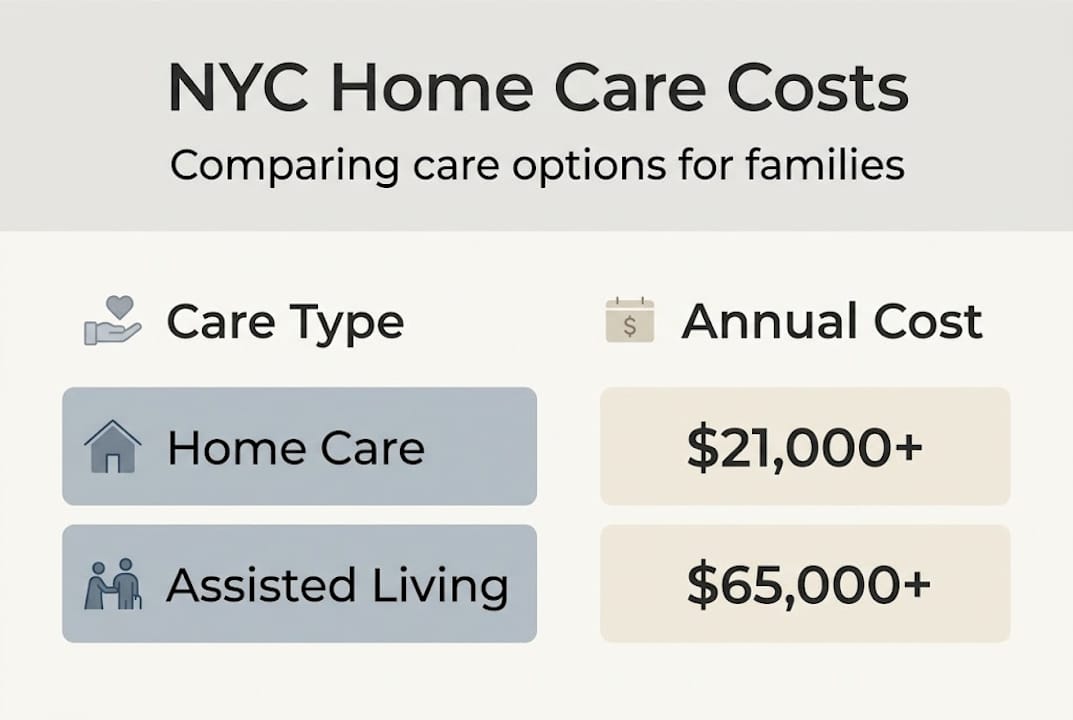
Care type | Estimated annual cost | Setting |
Part-time non-medical home care | ~$21,000/year | Your loved one’s home |
Assisted living facility | ~$54,000/year | Shared facility |
Nursing home (semiprivate) | ~$116,000/year | Institutional facility |
The cost difference is significant. Part-time home care can cost as little as $21,000 annually compared to over $116,000 for a nursing home, making it the most budget-friendly option for families who want quality care without institutional placement.
Payment options for non-medical home care in New York include:
Private pay: Most families pay out of pocket, especially for shorter-term or supplemental care needs.
Long-term care insurance: Many private insurance policies specifically cover non-medical home care. Review your policy carefully or contact your insurer to confirm coverage.
Medicaid waiver programs: Select Medicaid waivers may cover non-medical home care for eligible low-income seniors in New York. Eligibility requirements vary and families should work with a care coordinator or social worker to determine what applies.
Veterans benefits: Qualifying veterans may access home care benefits through the VA, which can offset costs significantly.
“Choosing home care over a facility is often both the more affordable and the more humane decision. Seniors do best in familiar surroundings, and the numbers back that up.”
Understanding exactly what you are paying for matters too. Reputable agencies will provide a written agreement detailing services, hours, rates, and caregiver qualifications before care begins. This is also a good moment to ask about supervision protocols and how the agency handles caregiver absences. You can read more about what in-home care for independence looks like in practice for families across the region, and find out what families in our area have experienced with Westchester home care agencies.
Regulations, agency licensing, and choosing care in New York
New York State takes home care regulation seriously. Under New York Public Health Law Article 36, any agency that provides non-medical home care services must be formally licensed by the New York State Department of Health. This licensing requirement protects clients by ensuring agencies meet defined standards for caregiver training, supervision, safety protocols, and care plan development.
Unlicensed caregivers or agencies operating without proper certification may expose your loved one to serious risks. This is not a minor technicality. It is the foundation of safe, legal care in this state.
Here is what the licensing framework means in practical terms:
Requirement | What it means for your family |
DOH licensure | Agency has passed state review and meets care standards |
Caregiver background checks | All aides have been screened for criminal history |
Ongoing supervision | Agency supervisors monitor and evaluate caregiver performance |
Written care plans | Your loved one’s needs are formally documented and reviewed regularly |
Training certification | Aides complete required training hours before placement |
When you are evaluating home care agencies in New York, here is a clear step-by-step approach:
Verify state licensure. Ask for the agency’s New York State Department of Health license number and confirm it is active.
Ask about Joint Commission accreditation. This optional but meaningful accreditation signals that an agency exceeds basic state requirements.
Review caregiver screening practices. Confirm that all aides undergo background checks, reference checks, and formal training.
Request a care plan assessment. A reputable agency will schedule an in-home visit before placing any caregiver to build a plan around your loved one’s specific needs.
Ask how they handle caregiver substitutions. Consistency matters in home care. Know what happens if your regular caregiver is unavailable.
Clarify supervision and communication. Find out how often the agency checks in, how you report concerns, and who your main contact is.
Pro Tip: Do not rely on word-of-mouth alone. Always verify licensing directly with the state. A family friend may have had a good experience with a caregiver, but unlicensed arrangements leave your loved one without legal protections. The home care workflow guide walks families through exactly what to expect at each stage of the process, and our personal care services guide breaks down what specific services look like day to day.
Friendly Home Care is fully licensed by the New York State Department of Health and accredited by The Joint Commission. Every caregiver on our team is screened, trained, and supervised to deliver consistent, high-quality care across all five boroughs and Westchester County.
Our take: What most families miss about non-medical home care
After working with families across Brooklyn, Queens, the Bronx, Manhattan, Staten Island, and Westchester, we have seen a clear pattern. Most families focus almost entirely on the physical tasks, bathing, meals, transportation, and miss the deeper impact that non-medical home care has on emotional and mental well-being.
The social connection a caregiver provides is not a bonus feature. It is often the most important part of the service. Seniors who receive regular companionship report better mood, more motivation to stay active, and stronger feelings of safety. That is not anecdotal. Senior wellness outcomes consistently reflect the power of consistent human presence in a person’s daily life.
The other thing families miss is flexibility. Many assume home care is rigid, that you must commit to full-time hours or a set package. In reality, care can be tailored to exactly what your loved one needs today, and adjusted as those needs change. A few hours a week for companionship and errands can grow into daily personal care support over time without disruption.
Finally, families often delay too long because they worry about finding a trustworthy agency. Start earlier than you think you need to. Having a care relationship in place before a health crisis means faster, smoother support when it matters most.
Get local support for your family
If you are ready to explore non-medical home care for a family member in New York City or Westchester County, we are here to help. At Friendly Home Care, we make the process straightforward. We start with a personalized consultation to understand your loved one’s needs, then build a care plan that fits your family’s schedule and budget. Our caregivers are trained, multilingual, and matched carefully to each client. Whether you need a few hours of weekly companionship or daily personal care assistance, explore our full range of home health services and see what dedicated, local care looks like. Visit Friendly Home Care to schedule your consultation today.
Frequently asked questions
How is non-medical home care different from home health care?
Non-medical home care assists with daily tasks and companionship, while home health care involves clinical services delivered by licensed professionals such as nurses or therapists. Under New York Public Health Law Article 36, both types of care are governed by state licensing requirements but serve distinctly different needs.
What is the typical hourly cost for non-medical home care in NYC?
Rates in New York City and Westchester typically range from $25 to $35 or more per hour, which is consistent with or above national averages of $33 to $35 per hour in 2025 and 2026. Costs vary by agency, hours needed, and specific services provided.
Can Medicaid or insurance cover non-medical home care?
Some families qualify for coverage through select Medicaid waivers or long-term care insurance, but most non-medical home care is paid privately. A care coordinator can help you determine which programs your loved one may be eligible for.
What licensing is required for home care agencies in New York?
All home care agencies in New York State must be licensed under Article 36 of the New York Public Health Law. This licensing ensures minimum standards for caregiver training, supervision, and client safety are met before any services begin.
Does non-medical home care help reduce senior isolation?
Yes. Regular caregiver visits provide consistent human connection, and data shows that reducing isolation is one of the most measurable benefits of home care for mobility-limited older adults in New York City and beyond.
Recommended