
Supportive services for seniors: A guide for NYC families
- Jun 1
- 9 min read
TL;DR:
Many families delay exploring in-home support for their aging loved ones, which can result in unnecessary decline and crises. Supportive services help seniors with daily tasks and improve their quality of life, often reducing hospital visits and costs when introduced early. Choosing licensed, well-matched agencies and starting support before crises arise ensures safety, independence, and better long-term outcomes.
Many families in New York City and Westchester County wait too long before exploring in-home support for an aging parent or grandparent. The common belief is that these services are only for people who are seriously ill or completely dependent on others. That belief can cost seniors months or even years of better living. Supportive services for seniors cover a wide range, from help with bathing and meals to simple companionship, and they can make an enormous difference well before a crisis occurs. This guide will walk you through what these services actually include, what programs are available locally, and how to find trustworthy care.
Table of Contents
Key Takeaways
Point | Details |
Broad range of support | Supportive services can include personal care, companionship, and help with daily life tasks. |
Local programs available | NYC and Westchester families can access specialized home care programs for seniors, even for those not on Medicaid. |
Real impact on independence | Supportive services lead to fewer hospitalizations and more daily success, helping seniors stay at home safely. |
Importance of quality providers | Choose licensed, well-screened caregiver agencies for trustworthy and safe in-home support. |
What are supportive services for seniors?
Supportive services for seniors refer to non-medical help provided at home to assist older adults with the tasks of daily life. These are not hospital-level interventions. They are practical, hands-on forms of support that help seniors stay safe, comfortable, and confident in their own homes.
Some of the most common examples include:
Bathing, grooming, and dressing assistance
Meal preparation and grocery support
Mobility help and fall prevention
Medication reminders
Companionship and conversation
Light housekeeping
Transportation to appointments
What makes these services especially valuable is that they are built around the individual. A good provider will conduct a full assessment of the senior’s needs, preferences, and daily routine before creating a customized home care plan. That plan may change over time as the senior’s needs shift.
“Good supportive care is not about doing everything for someone. It is about helping them do as much as they can for themselves, with the right support in place.”
The state of New York offers several pathways to access these services. Personalized care services are available through both Medicaid and non-Medicaid routes. One significant option is the Consumer Directed Personal Assistance Program, or CDPAP. This Medicaid program allows eligible seniors to choose their own caregivers, including family members or friends who can be paid for the care they provide. This is a meaningful benefit for families who want to stay closely involved in a loved one’s care while also receiving financial support for doing so.
Working with a state-licensed provider matters. New York State Department of Health licensing ensures that an agency meets standards for caregiver training, supervision, and client safety. Beyond licensing, the best agencies match caregivers to clients based on personality, language, and care needs, not just availability. This thoughtful matching improves the relationship between caregiver and senior, which directly impacts the quality of care received.
The benefits of supportive services go well beyond physical health. Seniors who receive regular in-home support report higher levels of confidence, stronger social connection, and a greater sense of autonomy. These are not small things. Isolation and loss of independence are among the most significant risk factors for decline in older adults.
Key supportive programs in NYC and Westchester
With a clear understanding of the services, let’s look at the key support options available to families in New York City and Westchester.
New York City and Westchester County each offer distinct programs designed to meet local seniors’ needs. Understanding what exists in your area is the first step toward accessing the right help.
Program | Who it serves | Key benefits |
NYC DFTA Home Care | Low-income seniors 60+ with ADL needs | Services can start within 5 days |
CDPAP (Medicaid) | Medicaid-eligible seniors statewide | Family members can serve as paid caregivers |
Westchester EISEP | Non-Medicaid seniors 60+ in Westchester | Case management, home care, and respite |
Project Time-Out | Family caregivers in Westchester | Respite care to prevent caregiver burnout |
The NYC Department for the Aging, known as DFTA, provides home care services to low-income seniors 60+ who have difficulty with activities of daily living but do not qualify for Medicaid. One of the most important features of this program is speed. The goal is to begin services within five days of approval, specifically to prevent unnecessary nursing home placement.
In Westchester County, the Expanded In-Home Services for the Elderly Program, or EISEP, provides case management and direct home care to seniors who do not meet Medicaid eligibility. The county also offers Project Time-Out, a respite program designed to give family caregivers a scheduled break while ensuring their loved one receives professional attention.
Here is a practical step-by-step approach to accessing these programs:
Contact your local Area Agency on Aging. In NYC, that is the DFTA. In Westchester, it is the Department of Senior Programs and Services.
Request an assessment. A case manager will evaluate the senior’s functional needs and living situation.
Review the options. You will receive a list of programs the senior qualifies for, including both Medicaid and non-Medicaid services.
Apply promptly. Many programs have waitlists. The earlier you apply, the sooner services can begin.
Ask about private pay options. If the senior does not qualify for funded programs, private home care agencies can provide the same level of support.
Pro Tip: Do not wait until a hospitalization or fall forces the issue. Applying for a senior wellness assessment early, as described in our guide on senior wellness support, can open doors to programs and funding that make home-based care more accessible and affordable.
How supportive services make a difference: Real-world impact
Next, let’s examine how these services transform outcomes for seniors and their families.
The value of supportive services becomes very clear when you look at actual data. This is not just about comfort. These services produce measurable improvements in health outcomes and significant reductions in healthcare costs.
Outcome | Without supportive services | With supportive services |
Emergency department visits | High frequency | Significantly reduced |
Hospital readmissions | Common after discharge | Substantially lower |
Cost per patient interaction | Thousands per ED visit | As low as $1,500 per patient |
Daily self-management | Inconsistent | 95% improvement reported |
Goal progress in care plans | Variable | 93% of clients show progress |
The numbers behind these outcomes are striking. Research into programs like Connected Care shows that in-home support reduced emergency department visits and hospitalizations significantly, with cost savings of approximately $1,500 per patient compared to thousands of dollars for a single emergency room visit. Mental health and personal outcome programs like SPOP reported that 95% of seniors showed greater daily management of their conditions, and 93% made measurable progress toward their personal care goals. Organizations like JASA completed over 1,209 home visits and assisted with 887 benefit enrollments in a single reporting period.
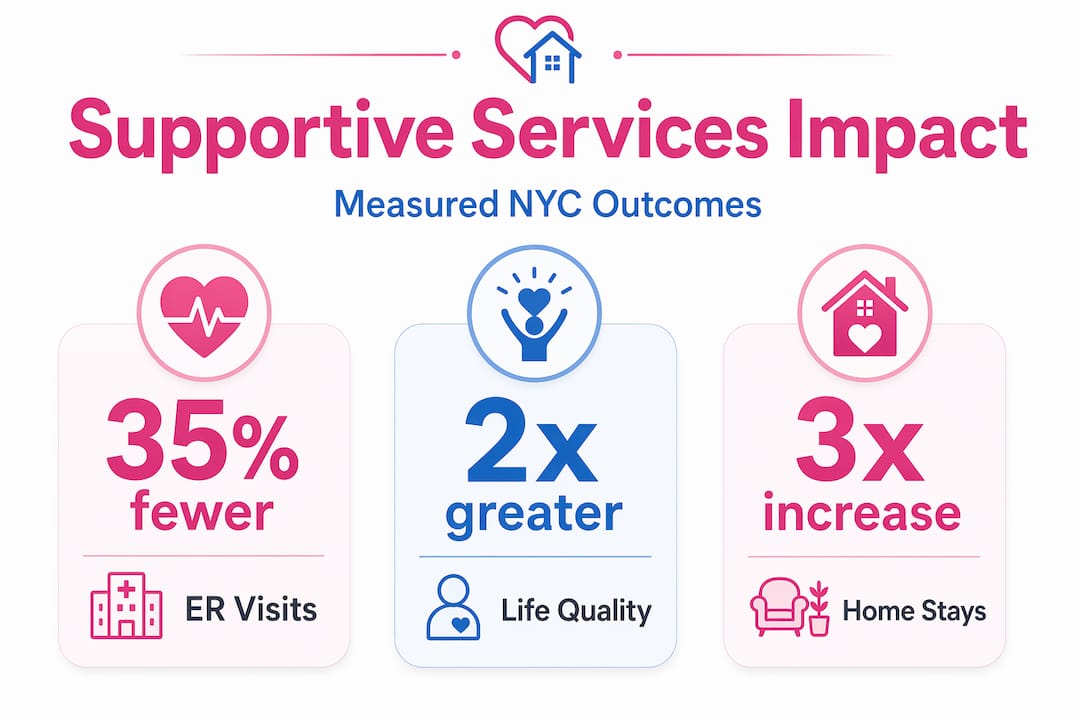
These figures reflect something important: seniors who receive consistent, personalized home support stay healthier, stay home longer, and cost the healthcare system less overall.
Consider the contrast between aging in place and institutional care. A semi-private room in a New York nursing home can cost upward of $150,000 per year. Home care services, even at significant levels of support, often cost a fraction of that amount while preserving the senior’s connection to their neighborhood, their family, and their daily routines. The emotional value of staying home cannot be overstated. Seniors who remain in familiar environments tend to maintain better cognitive function, stronger social ties, and a higher overall sense of well-being.
A family in Brooklyn, for example, may find that their 78-year-old mother simply needs help with bathing three mornings per week and a companion during afternoon hours. That modest level of support can be the difference between safe independent living and a preventable fall that leads to hospitalization. Our guide on supporting seniors at home covers many practical ways families can take an active role alongside professional caregivers.
Quality, safety, and finding reliable care
Understanding impact is meaningful, but knowing how to choose and maintain safe, high-quality care is essential.
Not all home care agencies are equal. Families deserve to know exactly what to look for when selecting a provider, and what safeguards should already be in place before a caregiver ever enters the home.
A reputable agency will maintain the following standards:
State licensing from the New York State Department of Health
Accreditation from recognized bodies such as The Joint Commission
Thorough background screening that includes criminal history, references, and work history
Skills training and competency verification for all caregivers
Bonding and insurance to protect clients and their property
Ongoing supervision with regular check-ins and care plan reviews
Caregiver matching based on the senior’s language, culture, and personal preferences
Research into service delivery quality shows that a seven-step screening process focused on personality and compassion, alongside formal training and ongoing monitoring, produces stronger outcomes for seniors. Agencies that cut corners on screening put vulnerable clients at risk. Always ask a prospective agency to describe their hiring and supervision process in specific terms.
One of the most frequently overlooked challenges in home care is caregiver fatigue among family members. When a son or daughter has been managing a parent’s care alone for months or years, burnout is real. Respite care services exist specifically to give family caregivers a break without leaving their loved one without support. Approximately 19.7% of eligible seniors and families remain unaware of the services available to them, which means a significant number of people are carrying a heavier burden than they need to.
Pro Tip: Schedule a care plan review every 90 days. Needs change, and a plan that worked well six months ago may no longer be the right fit. Ask your agency about their process for safe home care practices and how they monitor quality in home care over time. If a senior has added daily support tasks like laundry to their routine, additional daily support options can also help reduce caregiver workload.
A fresh perspective: Why supportive services are an investment, not a last resort
Having covered the essentials, let’s step back and consider a different way to view supportive services for your loved one.
We talk with families every week who tell us they held off on home care because they thought their parent “wasn’t ready” or “wouldn’t accept help.” That hesitation is understandable. Nobody wants to feel like they are taking something away from a person they love. But waiting for a crisis to force the decision is not kindness. It is actually one of the costliest choices a family can make, both financially and emotionally.
The conventional attitude treats supportive services as a last resort, something you call when everything else has failed. The reality is the opposite. When services are introduced early, before a senior has lost significant function or confidence, the outcomes are dramatically better. Independence is preserved longer. Hospitalizations are reduced. And the senior themselves often adapts more readily to having support when they are still feeling strong and capable.
This is where the importance of home care often gets missed in public conversation. The CDPAP model, for example, enables aging in place while actively reducing the long-term costs that come with institutionalization. It also honors the senior’s right to direct their own care, choosing who helps them and how. That self-direction is deeply tied to quality of life.
We believe families in New York City and Westchester should think of home care the same way they think of routine medical checkups. You do not wait until you are seriously ill to see your doctor. You go regularly to maintain your health and catch problems early. Supportive care for seniors works the same way. A few hours of help per week, arranged before they are critically needed, can keep a senior active, engaged, and safely at home for years longer than waiting until a fall or hospitalization forces a more intensive intervention.
Connect with dependable supportive services for your loved one
If you are ready to explore options tailored to your family’s unique situation, here is how to take the next step.
At Friendly Home Care, we are licensed by the New York State Department of Health and accredited by The Joint Commission. Our caregivers are thoroughly screened, trained, and matched to each client based on their personal needs, language, and preferences. We serve families across all five boroughs of New York City and throughout Westchester County, providing everything from personal care assistance to companionship and post-hospital recovery support. Our personalized home health services are designed to meet your loved one where they are right now and grow with them over time. Contact us today to schedule a consultation and find out which options are the right fit for your family.
Frequently asked questions
What types of supportive services can seniors receive at home?
Seniors can access personal care assistance, companionship, help with daily tasks, respite care for family caregivers, and specialized programs based on individual assessments and eligibility, including Medicaid options like CDPAP.
Who qualifies for in-home supportive services in New York City and Westchester?
Eligibility varies by program, but services are available to low-income seniors 60+ with ADL needs, seniors not covered by Medicaid through programs like EISEP in Westchester, and Medicaid recipients through state-funded home care programs.
How do supportive services help seniors remain independent?
Consistent in-home support helps seniors manage daily activities safely and reduces the need for emergency care, with research showing significant ED visit reductions and 95% improvements in daily self-management among seniors receiving these services.
How do I find trustworthy in-home caregivers for my loved one?
Look for agencies with New York State licensing, thorough background screening, and caregiver insurance. Research shows that rigorous screening processes focused on personality, compassion, and ongoing oversight consistently lead to better outcomes for seniors and their families.
Recommended