
What is personal care assistance? A 2026 NYC guide
Updated: May 4
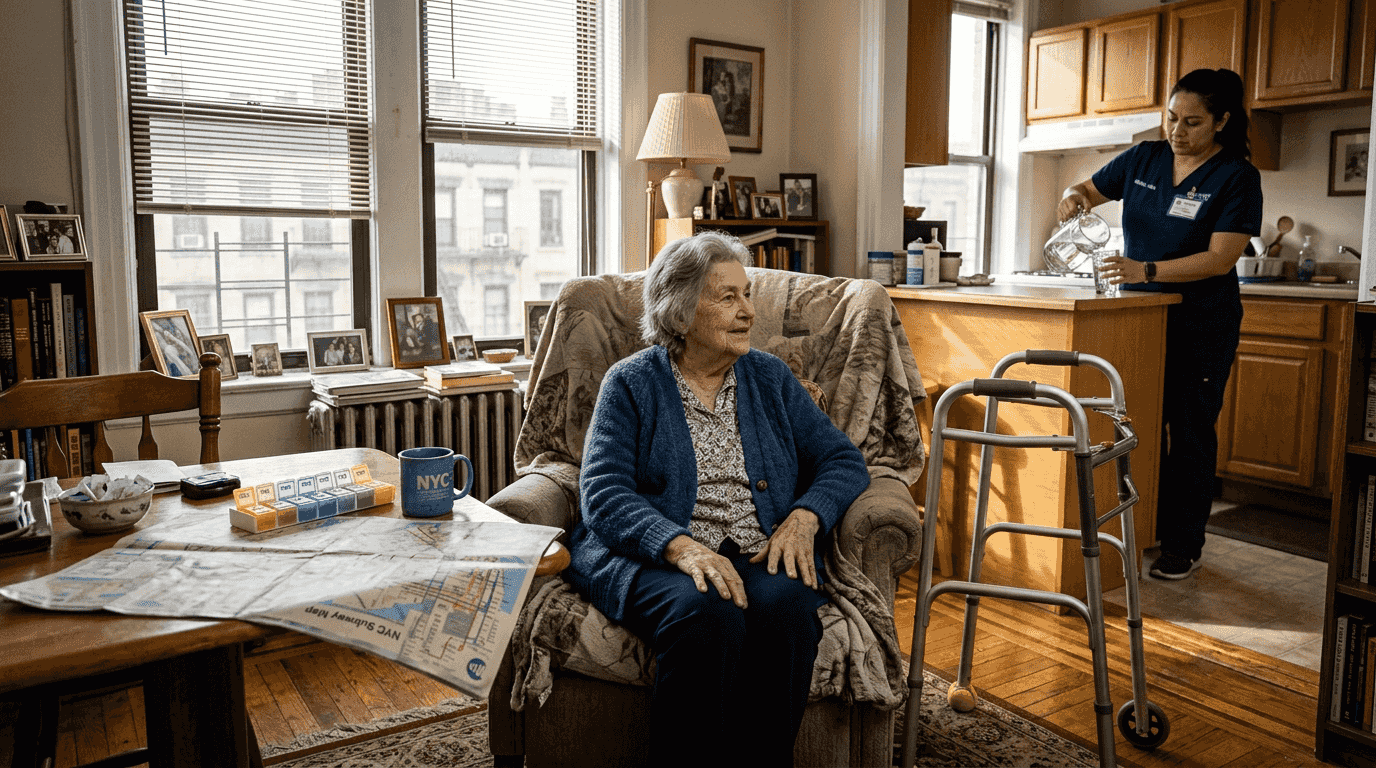
Families across New York City and Westchester often feel overwhelmed when trying to understand personal care assistance options for their aging loved ones. Many assume all Medicaid home care programs work the same way, only to discover confusing differences between PCS and CDPAP that affect who manages caregivers and how services are delivered. With new eligibility rules taking effect in 2026, navigating these programs has become even more complex. This guide cuts through the confusion by explaining what personal care assistance really means, clarifying the key distinctions between available programs, outlining the latest eligibility updates, and providing actionable steps to help you choose and apply for the right services for your family in NYC and Westchester.
Table of Contents
New Minimum Needs Requirements And Eligibility Updates For Personal Care Assistance In 2026
Navigating Personal Care Assistance: Choosing The Right Program And Applying In NYC And Westchester
Find Compassionate Personal Care Assistance With Friendly Home Care
What Is Personal Care Assistance? Frequently Asked Questions
Key takeaways
Point | Details |
Two main programs | PCS and CDPAP both provide Medicaid-funded home care but differ in who employs and manages caregivers. |
Employment structure | PCS caregivers work for agencies while CDPAP lets consumers directly hire and supervise personal assistants. |
2026 eligibility changes | New Minimum Needs Requirements started September 1, 2025 affecting PCS, CDPAP, and Managed Long Term Care eligibility. |
Legacy status protection | Individuals authorized before September 1, 2025 receive exemption from new reassessment requirements. |
Program switching impacts | Changing between PCS and CDPAP can affect existing caregiver relationships and care continuity. |
Understanding personal care assistance in New York City and Westchester
Personal care assistance helps seniors and individuals with mobility or medical needs maintain independence at home by providing support with daily activities they can no longer manage alone. In New York, Medicaid funds two primary programs delivering this essential support: Personal Care Services (PCS) and the Consumer Directed Personal Assistance Program (CDPAP). While CDPAP and PCS share the same goals of keeping people safe and independent in their homes, they operate very differently in practice.
Both programs cover similar personal care tasks that many families need. Caregivers assist with bathing, dressing, grooming, toileting, and transferring in and out of bed or chairs. They help with meal preparation, light housekeeping, medication reminders, and mobility support throughout the home. For families in Brooklyn, Manhattan, Queens, the Bronx, Staten Island, and Westchester, these personalized home health services make the difference between institutional care and aging in place with dignity.
The choice between PCS and CDPAP significantly affects your daily experience with care. Understanding how each program structures caregiver employment, supervision, and consumer control helps you select the option that best fits your loved one’s preferences and lifestyle. Before starting home care services, families should carefully assess not just medical needs but also how much direct involvement they want in managing care.
Pro Tip: Consider whether your loved one values consistency with a specific caregiver or prefers the flexibility to choose and direct their own assistant when deciding between programs. This preference often matters more than minor differences in covered services.
Many NYC families discover that compassionate home health care services require more than just meeting eligibility criteria. The right program match depends on your family’s comfort level with administrative responsibilities, existing relationships with potential caregivers, and desire for control over care decisions. Taking time to understand these foundational differences prevents frustration and service disruptions down the road.
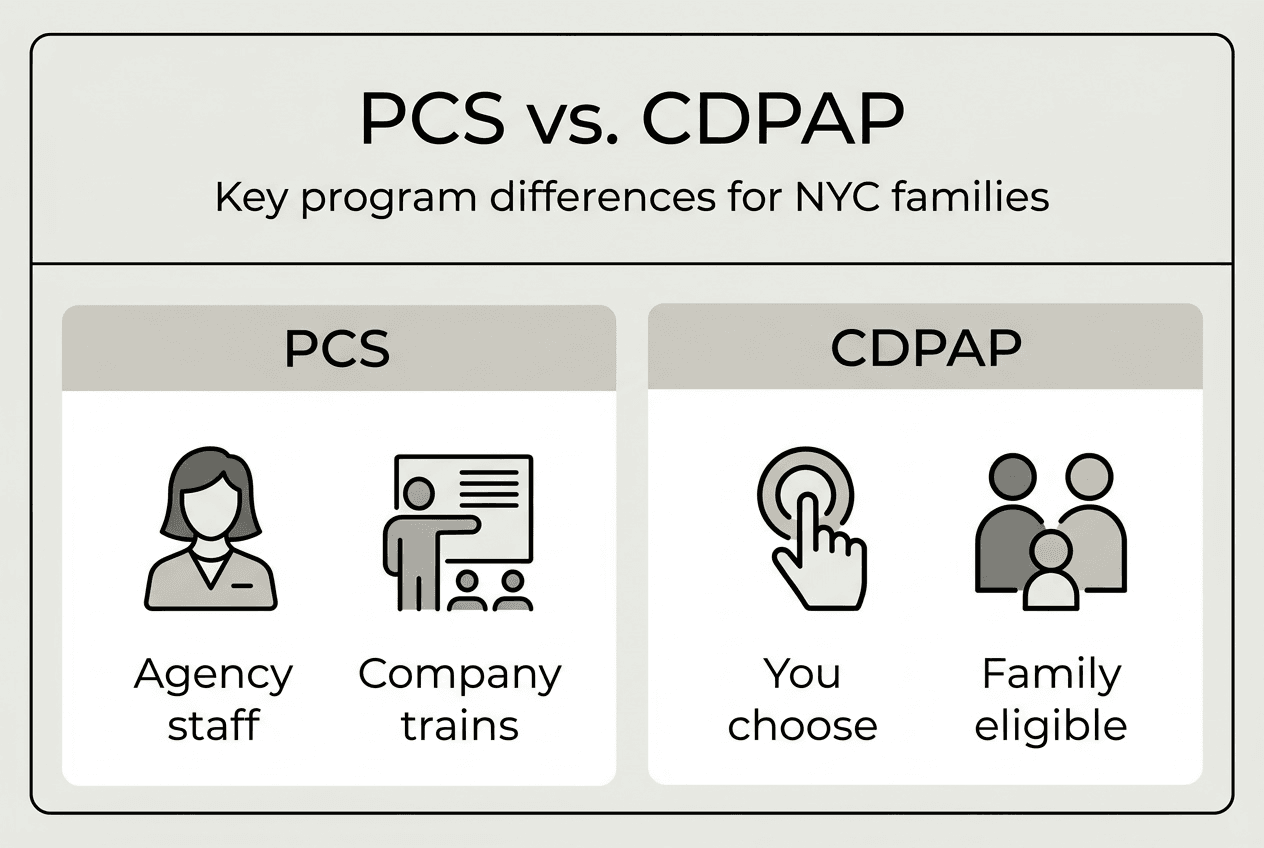
Key differences between Personal Care Services (PCS) and Consumer Directed Personal Assistance Program (CDPAP)
The fundamental distinction between these programs lies in employment structure. PCAs are employed by home care agencies while PAs work directly for the consumer. This difference cascades into every aspect of how care is delivered, supervised, and managed in your home.
Under PCS, a licensed home care agency handles all employment responsibilities. The agency recruits, hires, trains, and supervises Personal Care Assistants who come to your home. PCAs must meet specific qualifications including mandatory training, competency evaluations, and comprehensive background checks before serving clients. The agency coordinates schedules, manages payroll, provides backup coverage when your regular PCA is unavailable, and handles any performance issues that arise.
CDPAP flips this model entirely by making the consumer the employer. You recruit, hire, train, and supervise your own Personal Assistant. This means you can choose a family member, friend, or trusted individual to provide your care, someone who already knows your preferences and routines. You control the schedule, direct how tasks are performed, and make all decisions about your care delivery. However, you also assume responsibility for training your PA, managing their performance, and finding backup coverage when needed.
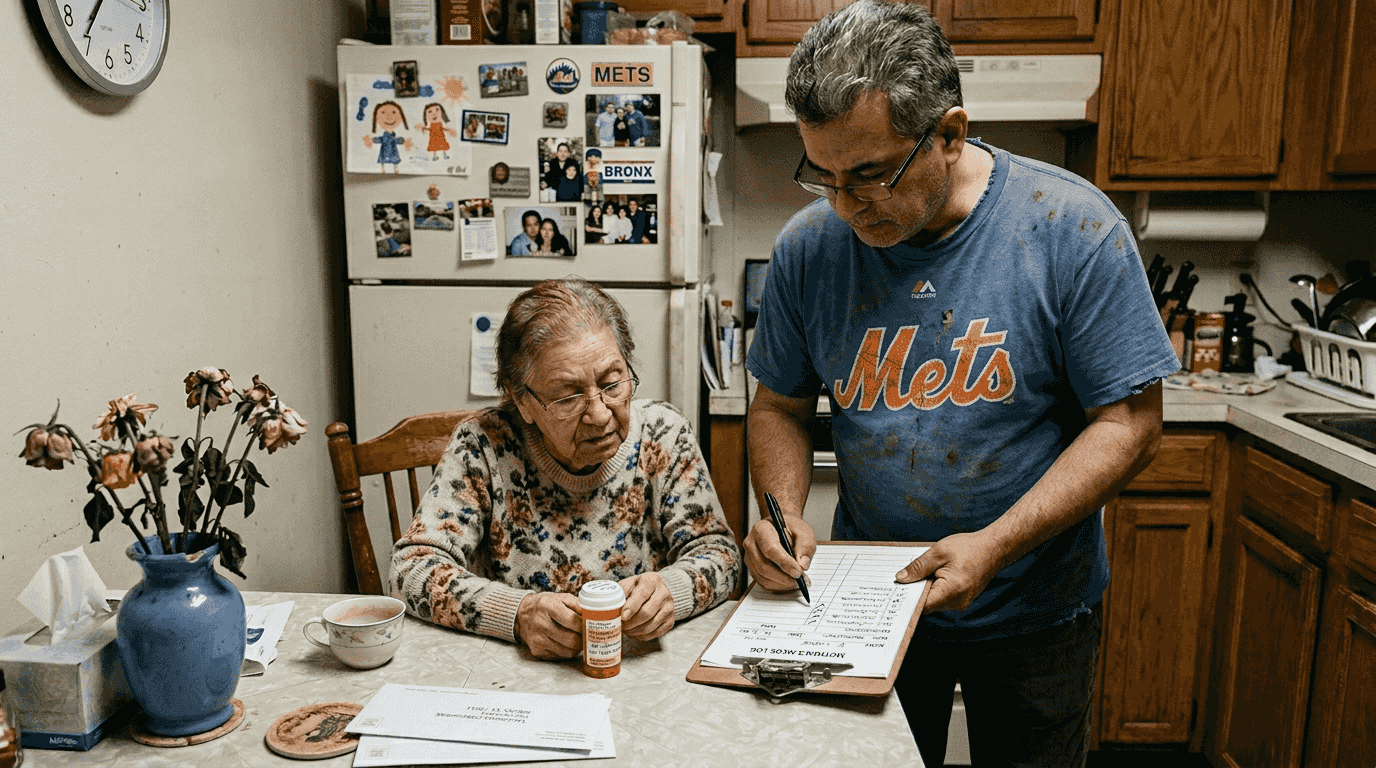
The supervision difference significantly impacts care consistency and quality. Agency-employed PCAs receive ongoing oversight, continuing education, and performance monitoring from professional supervisors. If problems arise, the agency intervenes and can reassign caregivers. With CDPAP, you directly address any concerns with your PA, which offers more control but requires more active management on your part.
Feature | PCS | CDPAP |
Employer | Home care agency | Consumer (you) |
Caregiver selection | Agency assigns PCA | You choose your PA |
Supervision | Agency supervises | You supervise |
Training requirements | Agency provides mandatory training | You arrange training |
Background checks | Agency conducts | You verify |
Schedule control | Coordinated with agency | You set schedule |
Backup coverage | Agency provides | You arrange |
These structural differences affect caregiver relationships in meaningful ways. PCS offers professional oversight and administrative support but less flexibility in choosing who enters your home. CDPAP provides maximum control and the comfort of familiar caregivers but requires you to handle employer responsibilities. Families pursuing compassionate care practices for seniors should weigh these tradeoffs carefully.
Pro Tip: If you already have a trusted family member or friend willing to serve as your caregiver, CDPAP often provides a smoother path than trying to get that person hired through a PCS agency. However, be realistic about your ability to manage the employer responsibilities before committing.
Understanding quality home care characteristics helps clarify which program structure supports your priorities. Some families thrive with the independence CDPAP offers, while others prefer the professional infrastructure PCS agencies provide. Neither choice is inherently better, the right answer depends entirely on your situation and preferences.
New Minimum Needs Requirements and eligibility updates for personal care assistance in 2026
New York implemented significant eligibility changes that directly affect families seeking personal care assistance in 2026. New Minimum Needs Requirements became effective September 1, 2025 for Personal Care Services, Consumer Directed Personal Assistance Services, and Managed Long Term Care programs. These updated criteria establish stricter standards for determining who qualifies for Medicaid-funded home care services across NYC and Westchester.
The timing of your authorization matters enormously under these new rules. Individuals authorized before September 1, 2025 receive Legacy Status and are exempt from the new Minimum Needs Requirements during reassessment. If your loved one already receives PCS or CDPAP services that started before this cutoff date, their eligibility continues under the previous standards. This protection provides crucial stability for families already receiving care.
For those applying after September 1, 2025, the landscape has changed considerably. Here is what families need to know about the new eligibility framework:
All new applicants must undergo assessment by the NY Independent Assessor Program to determine eligibility under the updated Minimum Needs Requirements.
Medicaid Managed Care plans conduct ongoing reassessments to reauthorize services, ensuring continued eligibility under current standards.
Voluntary transfers between managed care plans now trigger reassessment under the new requirements, even for those with Legacy Status.
The updated guidelines supersede all previous conflicting policies and procedures related to PCS, CDPAS, and MLTC eligibility determinations.
Care managers must document that applicants meet the new threshold criteria before authorizing services or service increases.
“Where the guidance in this document differs from prior guidance, the guidance in this document supersedes that prior guidance.”
These regulatory changes mean families planning to apply for personal care assistance in 2026 face more rigorous screening than in previous years. The Independent Assessor Program evaluates functional limitations, medical needs, and ability to perform activities of daily living using standardized criteria. This assessment determines not only eligibility but also the authorized hours of care your loved one can receive.
For families currently receiving services, understanding reassessment triggers is critical. While Legacy Status protects you during routine reassessments, certain actions like switching managed care plans voluntarily can subject you to the new requirements. Before making any changes to your coverage, consult with your care manager about potential eligibility impacts.
The practical implications extend beyond initial eligibility. Medicaid Managed Care plans now apply these standards when evaluating requests for increased hours or expanded services. Even if your loved one qualified under previous rules, requesting more intensive care may require demonstrating need under the updated criteria. This makes starting home care services with appropriate hour authorizations from the beginning increasingly important.
Families should also recognize that these changes aim to standardize eligibility across New York while managing program costs. The Independent Assessor Program brings consistency to determinations that previously varied between managed care plans and regions. While this creates more uniform standards, it also means less flexibility in borderline cases where individual plan discretion previously helped families access services.
Understanding these 2026 eligibility rules helps families set realistic expectations and prepare thorough documentation when applying. Medical records, physician statements, and detailed descriptions of functional limitations all support your application under the new assessment framework. The more comprehensive your documentation of care needs, the stronger your case for empowering independent living services through PCS or CDPAP.
Navigating personal care assistance: choosing the right program and applying in NYC and Westchester
Selecting between PCS and CDPAP requires honest assessment of your family’s capabilities and preferences. Consumers should understand the differences before committing to either program because switching later can disrupt established care relationships. Start by evaluating these key factors:
Your comfort level managing employer responsibilities including hiring, training, scheduling, and supervising a caregiver
Whether you have a trusted family member or friend available and willing to serve as your personal assistant
Your need for professional oversight versus preference for direct control over care delivery
Your ability to arrange backup coverage when your primary caregiver is unavailable
The importance of having agency support for administrative tasks, payroll, and compliance requirements
The application process begins with determining your Medicaid eligibility. Contact your local Medicaid office or managed care plan to initiate an assessment. For new applicants in 2026, the NY Independent Assessor Program will evaluate your functional needs and determine which services you qualify for under the updated Minimum Needs Requirements. This assessment examines your ability to perform activities of daily living, medical conditions requiring assistance, and safety risks of living independently without support.
Once eligibility is established, you will work with a care manager to develop a care plan specifying authorized services and hours. This plan documents your needs and serves as the foundation for service delivery whether you choose PCS or CDPAP. Be thorough in describing all activities where you need assistance, as the authorized hours depend on demonstrated need.
If you select PCS, your managed care plan will connect you with licensed home care agencies serving your area in NYC or Westchester. The agency handles caregiver assignment, scheduling, and ongoing coordination. For CDPAP, you will work with a fiscal intermediary who manages payroll and tax compliance while you retain control over hiring and supervising your personal assistant.
Switching between programs after starting services carries significant implications. Changing from CDPAP to PCS or vice versa impacts care and existing caregiver relationships. Your current PA may not qualify as a PCA under agency standards, or an agency PCA may not want to become your employee under CDPAP. These transitions often mean finding a new caregiver and rebuilding the trust and familiarity that makes home care work well.
Pro Tip: Before switching programs, talk honestly with your current caregiver about their willingness and ability to continue under the new arrangement. Losing a trusted caregiver who knows your routines and preferences often outweighs any theoretical benefits of changing programs.
Reassessments occur periodically to reauthorize your services. Stay in regular contact with your care manager, report any changes in your condition or needs promptly, and respond quickly to reassessment requests. Missing deadlines or failing to provide required documentation can result in service interruptions that leave you without care while issues are resolved.
Families benefit enormously from working with experienced providers who understand NYC and Westchester Medicaid requirements. Local agencies familiar with regional managed care plans, documentation standards, and application processes help navigate bureaucratic complexities that overwhelm families trying to manage everything alone. Choosing quality home care starts with selecting knowledgeable partners who simplify the process.
The administrative burden of managing personal care assistance should not be underestimated. Between initial applications, ongoing reassessments, care plan updates, and coordination with multiple agencies, families invest considerable time and energy maintaining services. Understanding these requirements upfront helps you prepare and seek compassionate senior care practices that lighten the load.
Find compassionate personal care assistance with Friendly Home Care
Navigating PCS and CDPAP programs in New York City and Westchester becomes much easier with experienced local support. Friendly Home Care brings deep expertise in both personal care models, helping families understand their options and access the services that best fit their needs. Our team stays current with evolving Medicaid requirements, including the 2026 eligibility updates, so you receive accurate guidance throughout the application and reassessment process.
We create personalized care plans tailored to each client’s unique medical needs, mobility limitations, and lifestyle preferences across all five boroughs and Westchester County. Whether your family needs ongoing personal care assistance or short-term support during recovery, our home health services provide the professional, compassionate care your loved one deserves. Contact Friendly Home Care today to schedule a consultation and discover how we help NYC families secure reliable, quality home care.
What is personal care assistance? Frequently asked questions
What are the main programs that provide personal care assistance in New York?
New York offers two primary Medicaid-funded programs: Personal Care Services (PCS) where licensed agencies employ and supervise caregivers, and the Consumer Directed Personal Assistance Program (CDPAP) where you directly hire and manage your own personal assistant. Both programs cover similar daily living activities but differ significantly in who controls caregiver employment and supervision.
How do I know if my loved one qualifies for PCS or CDPAP?
Eligibility depends on functional limitations and medical needs assessed by the NY Independent Assessor Program under the Minimum Needs Requirements effective September 1, 2025. Your loved one must demonstrate difficulty performing activities of daily living independently and require assistance to remain safely at home. A care manager evaluates the assessment results to determine qualification and authorized service hours.
Can I switch between PCS and CDPAP after starting services?
Yes, but switching programs can significantly impact your existing caregiver relationship and care continuity. Your current caregiver may not qualify or want to work under the new program structure, potentially requiring you to find and train a new assistant. Carefully weigh these disruptions against any benefits before making a change.
What are the new eligibility requirements effective in 2026?
The new Minimum Needs Requirements that took effect September 1, 2025 establish stricter standards for PCS, CDPAP, and Managed Long Term Care eligibility. All new applicants undergo standardized assessment by the NY Independent Assessor Program, though individuals authorized before September 1, 2025 receive Legacy Status exempting them from the new criteria during routine reassessments.
Who manages and supervises the caregivers under these programs?
Under PCS, the home care agency employs, trains, and supervises Personal Care Assistants who provide your care. Under CDPAP, you become the employer responsible for recruiting, hiring, training, and supervising your Personal Assistant. This fundamental difference affects every aspect of care delivery, from scheduling flexibility to quality oversight and backup coverage arrangements.
Recommended